
Search Results for: "CFO"

Benjamin Netanyahu delayed comment for over a day after Trump’s Iran deal emerged, then broke with his usual playbook—he avoided mention of his rapport with the U.S. president.

Marriott International partnered with Grupo Satli and Aimbridge Hospitality to develop its first all-inclusive resort in Riviera Maya, Mexico, marking the brand’s entry into the all-inclusive segment in Latin America’s established resort market.

Latin American ministers and urban leaders at World Urban Forum 13 called for new housing finance models and stronger private investment to build climate-resilient cities across the region.

The EU and Mexico signed a Modernised Global Agreement and interim Trade Agreement at their 8th summit, cementing long-term economic and strategic ties.

Chinese chipmaker GigaDevice secured a multi-product automotive design contract with Tury, marking its largest Latin American automotive partnership to date.

Alipay+ partnered with PVS to launch cross-border mobile payments across Latin America, enabling travelers from Asia and the Middle East to pay with digital wallets at millions of merchants.
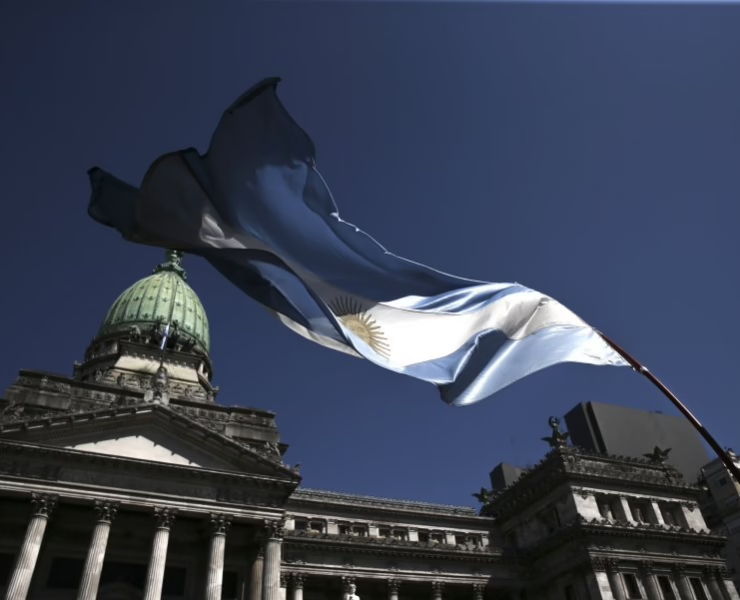
Argentina posted the lowest foreign direct investment among Latin America’s major economies in 2025, marking a sharp contrast with regional peers.

Chinese payment giant Alipay+, partnering with fintech PVS, launched cross-border mobile QR payments in Chile and Argentina, with regional expansion planned.

A Colombian energy company acquired a 3.5-gigawatt renewable energy portfolio spanning Latin America, including 1,273 megawatts operational or under construction and 2,250 megawatts in development.

Argentina, Chile, and Peru are advancing 30 greenfield copper projects worth over $71 billion in capital expenditure, targeting 3.9 million metric tons of new annual capacity by 2036.
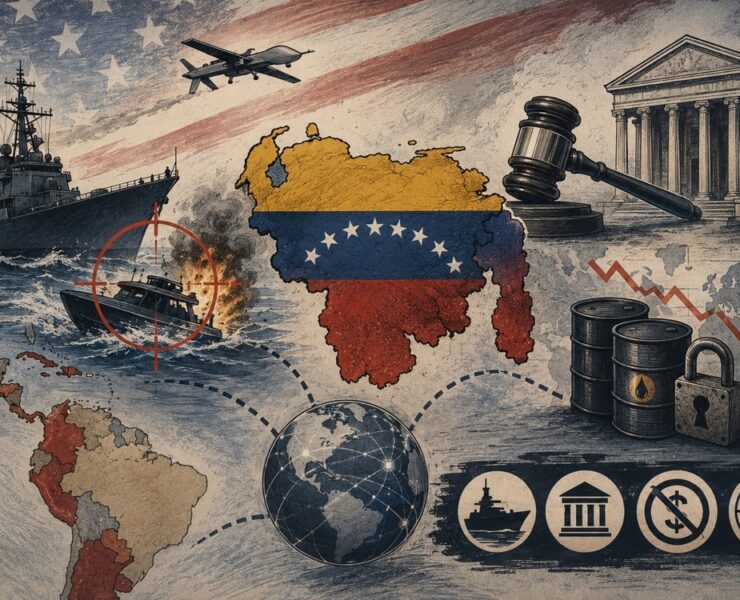
A U.S. military operation removed Venezuelan president Nicolás Maduro from power five months ago, marking the first forcible regime change in the Caribbean basin in decades.

Texas’ 2026 Senate race now hinges on exurban growth and a sharp Latino backlash against immigration enforcement, scrambling conventional red-state campaign playbooks.

Nu Holdings reached 135 million customers across Latin America, with rising revenue per active customer and improving margins driven by its digital-only model scaling in Mexico and Brazil.

Global mining companies are investing heavily in Brazil’s rare earth reserves, positioning the country as the first credible alternative to China’s 90 percent market dominance in magnetic metals critical to EVs and defense systems.

Fashion brands from Colombia to Argentina are using Spain as their European beachhead, banking on cultural ties to offset brutal costs and fierce local competition.
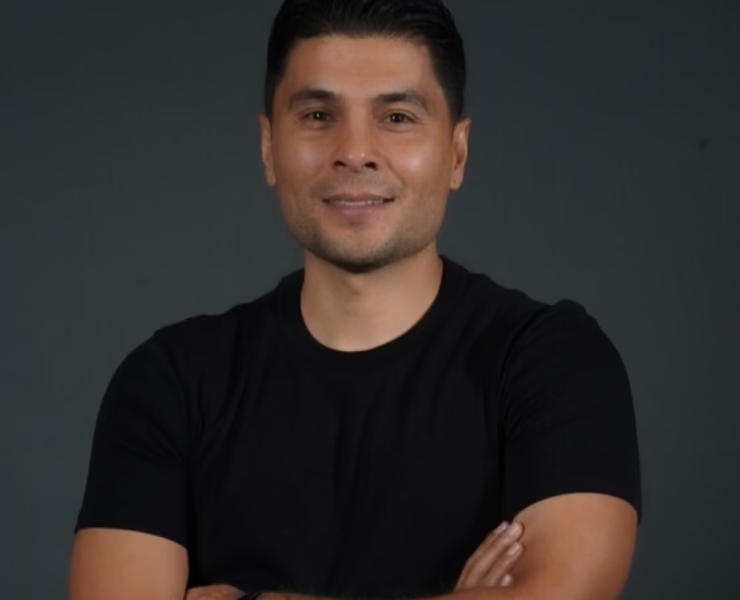
Cloud security platform Verkada appointed Carlos Rocha to lead its Latin American expansion, overseeing go-to-market strategy, sales operations, and partner development across the region.

Latino real estate agents closed $22.6 billion in transactions in 2025, with buyer’s agents driving transaction volume growth despite slight market compression.

Luda Technology Group Limited appointed five authorized agents across Peru, Colombia, Egypt, South Africa, and Chile to expand its distribution network for stainless and carbon steel flanges and fittings.

Federal immigration enforcement operations across North Carolina eliminated more than 3,000 jobs in a single week, according to state labor data, marking the steepest employment drop tied to raids in the state’s history.

Abu Dhabi’s AD Ports Group acquired Brazilian terminal operator CLI while Dubai-based DP World committed an additional $100 million to Dominican Republic port infrastructure, marking the Gulf’s largest coordinated Latin American logistics play.