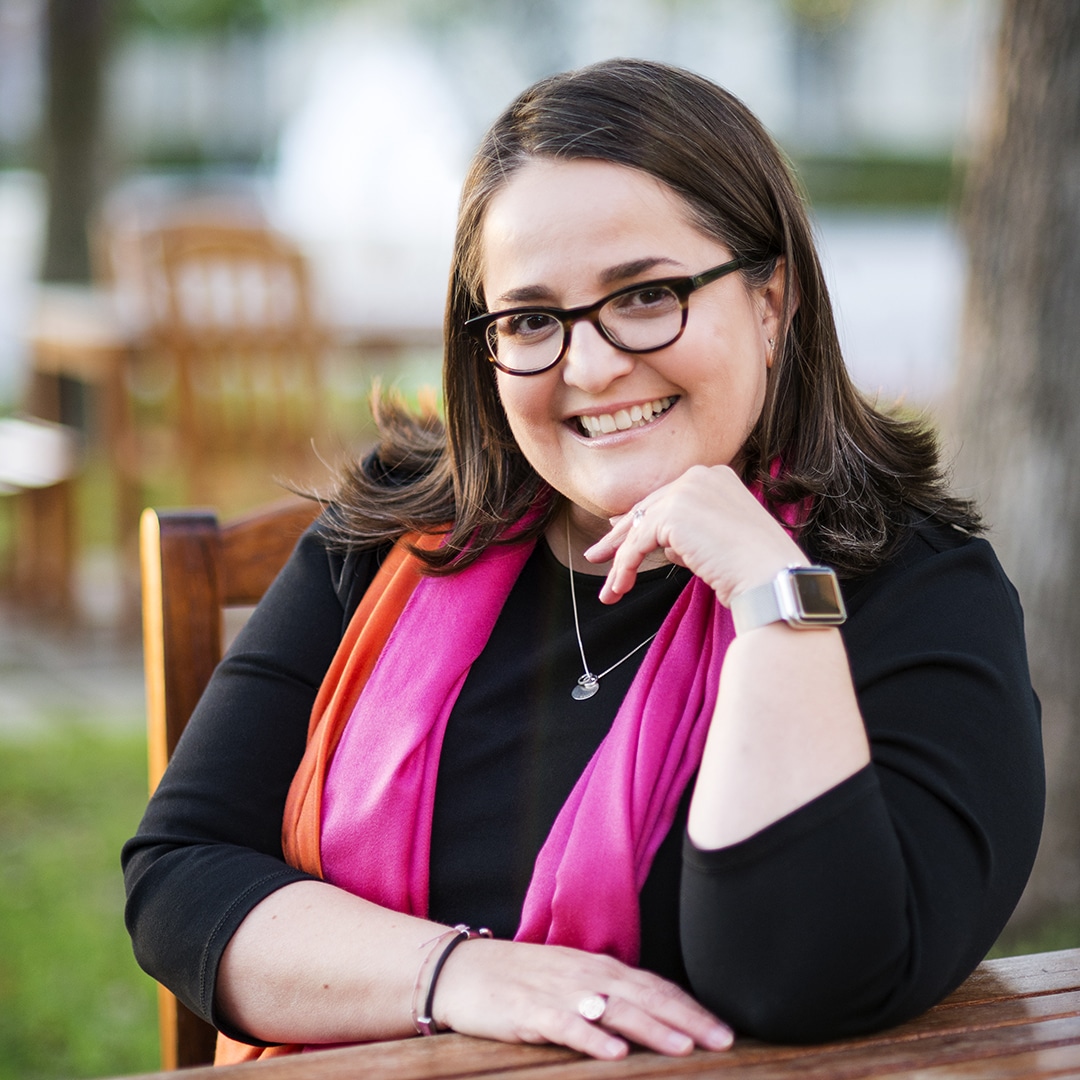

Rewind the clock to just over twenty years ago, and you’ll find Anita Ortiz starting at Paramount Pictures, a subsidiary of Viacom, in the international TV marketing department. That same year, the company didn’t fare very well in industry trade reports on diversity and inclusion, so Ortiz wrote a letter to then-CEO Sherry Lansing, with some suggestions and ideas. “She called right away,” recalls Ortiz, still amazed. “I was an assistant, and the CEO called my cubicle and talked to me about my ideas.”
Bolstered by this conversation, Ortiz started a research project. “I got a bankers box and called it my ‘diversifile,’” she says. “Any time I read an article about diversity and inclusion, it went into the box.” Meanwhile, she transitioned into increasingly responsible roles in government affairs, then corporate responsibility. When 2012 saw an expanded Viacom-wide focus on inclusion, Ortiz took the opportunity to get in touch with the senior executive leading the work, Marva Smalls. Shortly thereafter, Ortiz—and her “diversifile”—officially joined the inclusion team, bringing a new level of purpose to her career.
Her impressive vision of what her company can offer employees and consumers drives her. “Some people have a career. I have a passion for my work. This is a calling,” Ortiz says. She seeks to empower every employee to use their voice and reach their full potential.
“It is never too early in your career to have impact and influence in the C-suite, and that is exactly what Anita’s story teaches us all. Beyond having the position, it’s about having the courage to be culturally curious and dare to go as high as the CEO to recommend ways to become better. Anita didn’t wait for others to be part of the solution, she turned herself into the solution.”
—Liliana Gil Valletta, Guest Editor of Leading Latinas 2019
For Ortiz, global inclusion means looking at the whole Viacom system: the product and those who create it. She explains that she thinks about her work in four buckets: people, product, process, and presence. With these areas in mind, she partners with the corporation’s leaders to roadmap the way forward, ensuring D&I in each step.
“I am working so that diversity and inclusion are part of the mind-set for all leaders,” says Ortiz, who works closely with Viacom’s Global Inclusion Advisory Committee. “We are steadfast in commitment, yet flexible in approach. Each brand and each project is unique.”
For example, one show may employ people from traditionally underrepresented communities on the crew; for another project, that diversity may also be reflected in the characters who show up on screen; and they both may be working with diverse vendors. Ortiz is not working with numeric quotas, rather she is fighting stagnation—something she says can be an issue in entertainment. She’s doing all this by making sure all perspectives are heard and people are represented.
In the grand scheme, Viacom’s work is about telling compelling stories, and Ortiz knows those stories will be more successful if they reflect their audience, which requires a diverse staff who can understand a variety of communities. Also, it’s just smart business. “Equity in back-of-house is important,” she explains. “Diversity leads to new approaches to problem solving and better outcomes; it leads to more interesting and engaging workplaces and creative products.” It is diversity and inclusion that will keep the company competitive in a changing field, and Ortiz is charged with ensuring it permeates the company’s strategy and culture.
With human resources, Ortiz considers talent acquisition, retention, and data analytics. She is breaking down barriers to entry and opening paths to employment. Campus-to-career partnerships and open houses with programs such as the Posse Foundation expose potential candidates to Viacom’s vast career offerings. Once employees are on board, Ortiz builds resources to ensure they feel like they belong. She helped launch Viacom’s seven employee resource groups on the West Coast, and people lined up to participate. More than 700 employees came to the kick-off, demonstrating not only their desire for development opportunities but also for community.
Ortiz also recognizes that entry points to the industry are less linear than they once were. “Now there is a new generation of people who, when they don’t have access to a big company, will go create content on their own,” she says. Many online platforms offer direct access to audiences. This, Ortiz says, presents an opportunity for Viacom to find diverse and proven creators, widening the talent pool.
From dabbling in supplier diversity to forming partnerships with the company’s social responsibility teams, Ortiz infuses diversity into Viacom’s external partners while also improving its presence in diverse communities. “We consider vendors that might not have been part of the process before,” she explains. This includes businesses owned by women, people of color, disabled individuals, and within the LGBTQ community.
Challenging the status quo, she knows, means facing hurdles. “I’m short,” she jokes, “so I didn’t really have growing pains as a teen, but other people I know did.” She recognizes these pain points lead to growth and encourages others to be unafraid to have difficult conversations. “We have to be willing to push through our discomfort,” she says, though she likes to follow her grandmother’s advice and use a non-confrontational approach: “You catch more flies with honey than vinegar.”
Besides advocating for change, Ortiz focuses on helping people be their best: advance their careers and fulfill their dreams and visions. She does this work by acting as a resource and acknowledging people for what they bring to the table.
“We all need people to believe in us and help us on our trajectory. We need champions,” she says. “We must extend our hands to support the people who are coming up after us. I would not be here if people had not done that for me.”
In her everyday world, you’ll find Ortiz citing inspirational quotes, which elicits a nickname her colleagues have given her, “Cheesy-Ortizy.” You’ll also find her up and about, laughing with others, making sure she is not chained to a desk. Keeping spirits up is important to her because, as she acknowledges, D&I work can be exhausting. “It is tiring to continually explain why it is important and why it matters,” she says. For that reason, Ortiz believes it is critical to understand and affect change in her sphere of influence. “It is not my role to solve the problems but to give tools to help others find solutions for themselves,” she says. “And I am here as much for a senior executive as I am for a brand-new assistant.”
“We all need people to believe in us and help us on our trajectory. We need champions. We must extend our hands to support the people who are coming up after us. I would not be here if people had not done that for me.”
Of her own role as a Latinx executive, she says, “People in the Latinx community are often unseen, doing labor that is not always highly valued. I always want to acknowledge everyone. That is part of being a twenty-first century leader.” She understands, also, how her very visible role is important to the community, recalling a time when she was on her way into a meeting that included Viacom’s CEO and an older Latino employee stopped her to say, “We are so proud that you are at that table.”
“The Latinx community needs this now,” she says. “There is so much shade about immigrant communities, an entire people painted as less than,” she says. At the same time, she knows that as a Latina, having a senior role can be lonely and believes in the importance of building networks. “I am a proud Latina. But we don’t advance when we put ourselves in siloes. I want to have trusted colleagues from every background, and that means I must be an ally to them as well.”
Looking at the current sociopolitical environment, she again demonstrates the resilience of positive thinking.
“I have to have the confidence that we will come out the other side stronger,” she says. Then she offers a method for getting to that other side. “If we are going to make systemic change we must lock arms with everyone, majorities included. Don’t take seats away from the table. Pull up more chairs. There can be enough opportunity for all of us.”
More from Leading Latinas 2019
Our full list of 2019 Leading Latinas
Conversations at the Top: Zoe Saldana
A powerful message from guest editor Liliana Gil Valletta
Nathalie Rayes furthers the community impact of Grupo Salinas